


Copper patina
Copper patina: the colour that time made.
Green, turquoise, red brown and everything between. Twelve surfaces from our own workshop, for roof, façade and interiors. From Nürtingen, since the year 2000.
See the coloursTwelve surfaces, one metal
All twelve are copper. What separates them is the point at which the reaction was stopped. At the start there is warm copper orange, at the end the patina green of old roofs.

Deep, even mid green
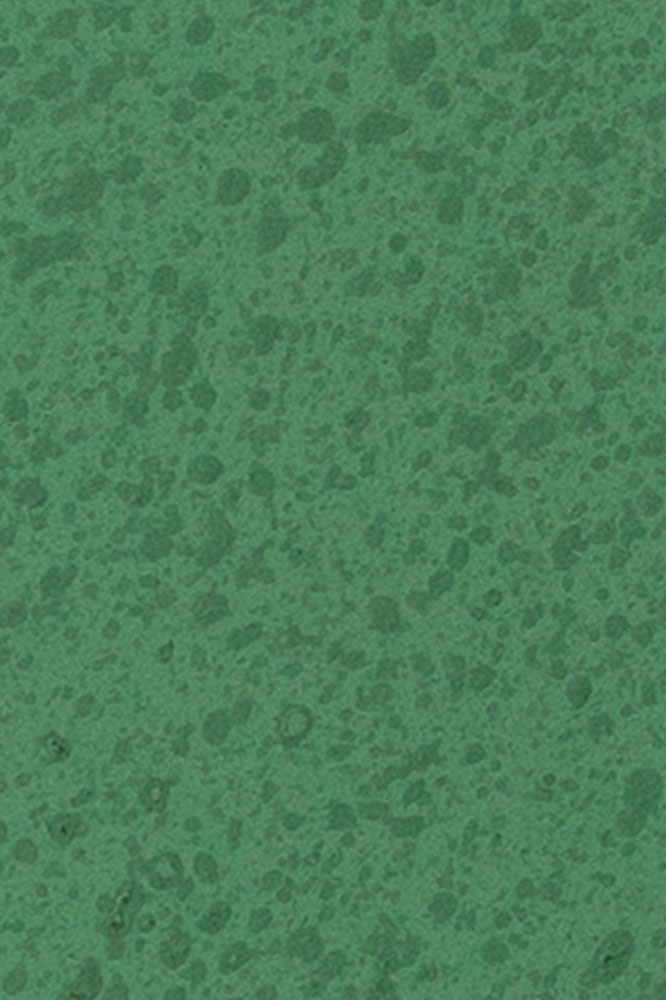
Strong green, densely speckled
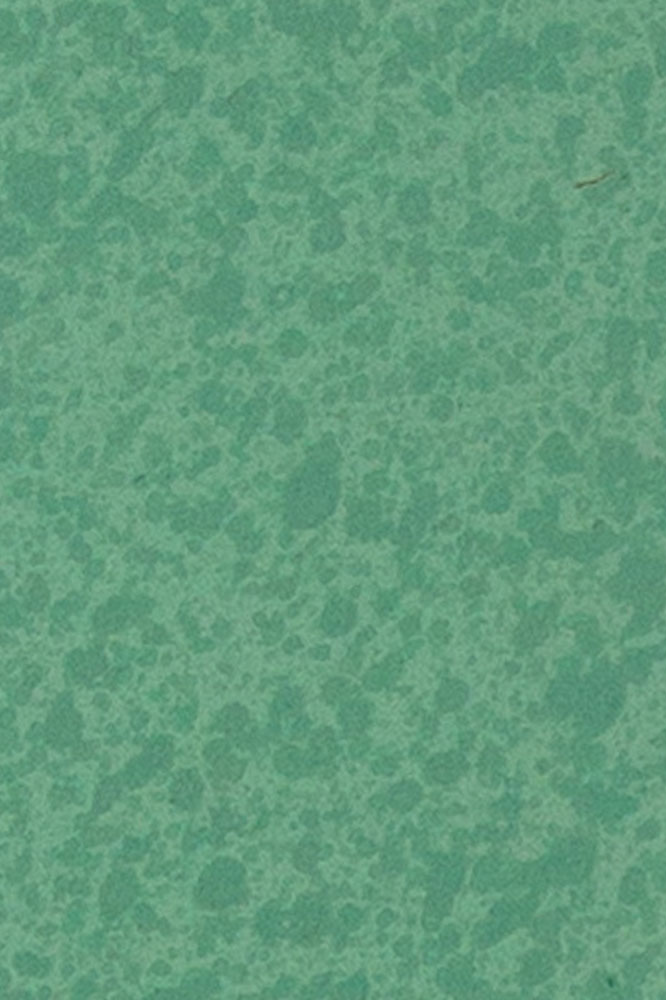
Mid green, clouded and calm
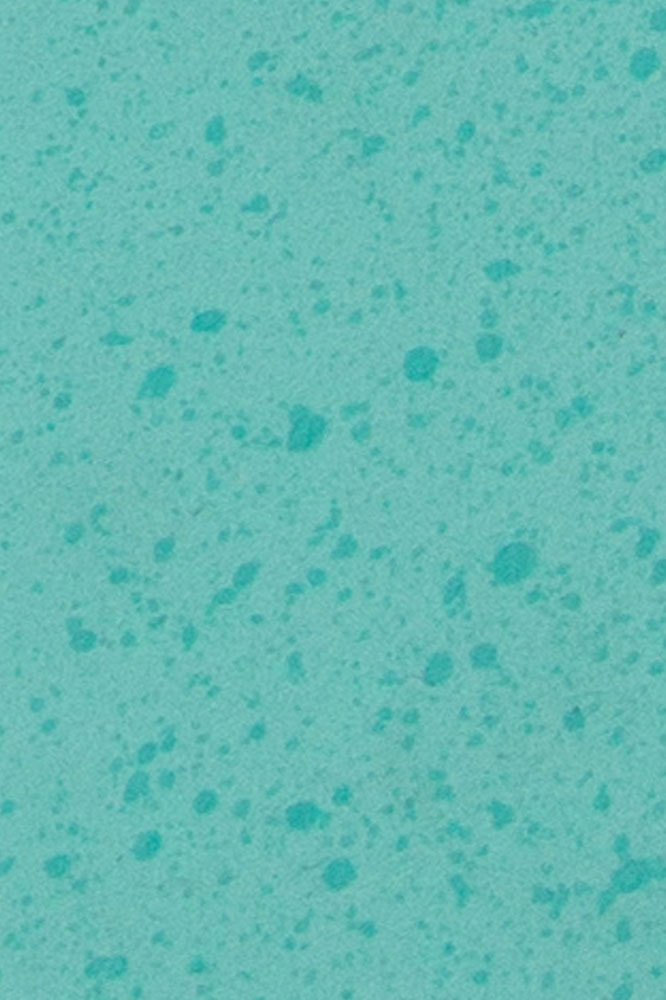
Light turquoise green with fine speckling
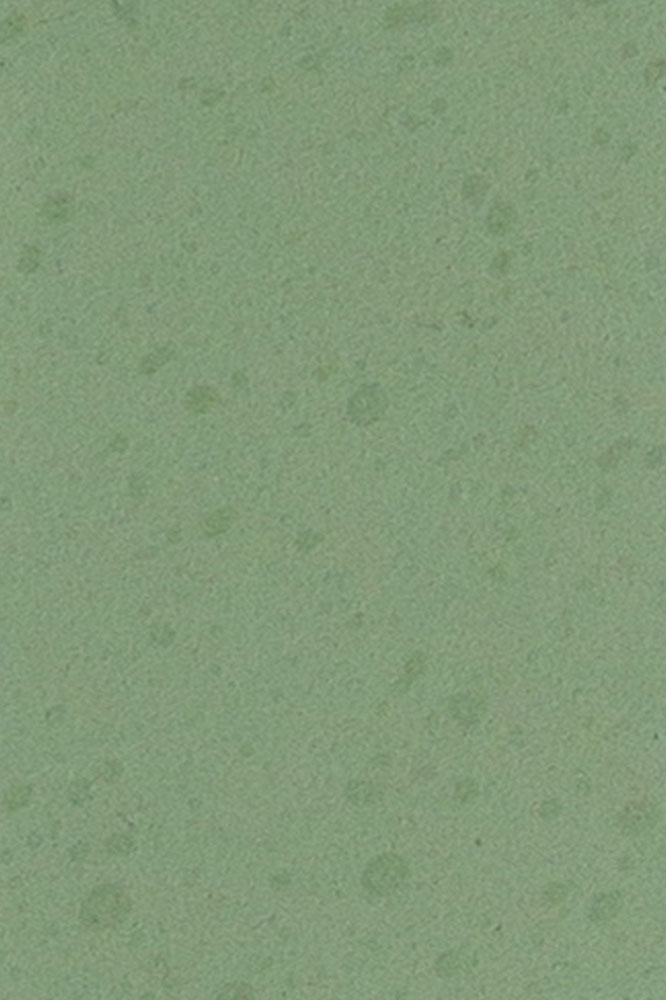
Muted sage green, almost uniform

Muted grey green, fine and matt
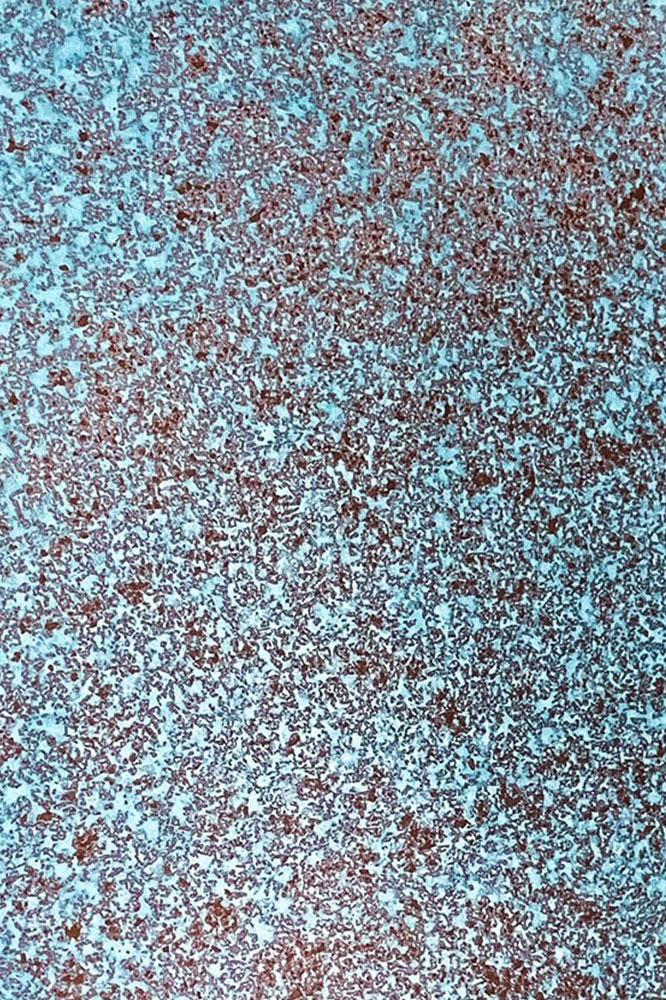
Light blue turquoise patina with red brown copper areas
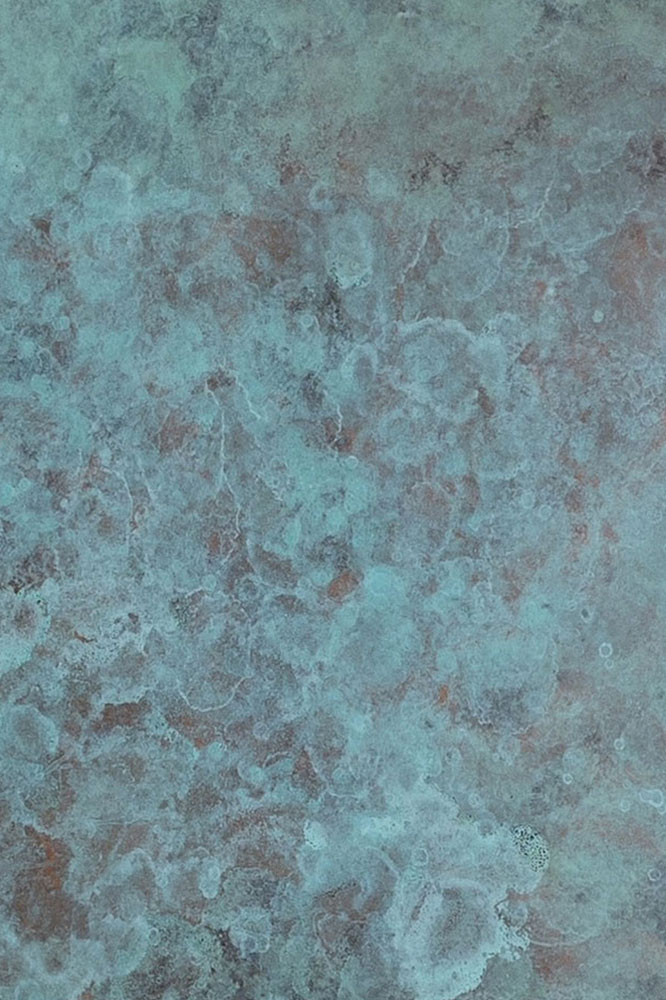
Turquoise blue patina with rust red breaks

Warm copper orange with a soft gradient

Light red brown, softly brushed
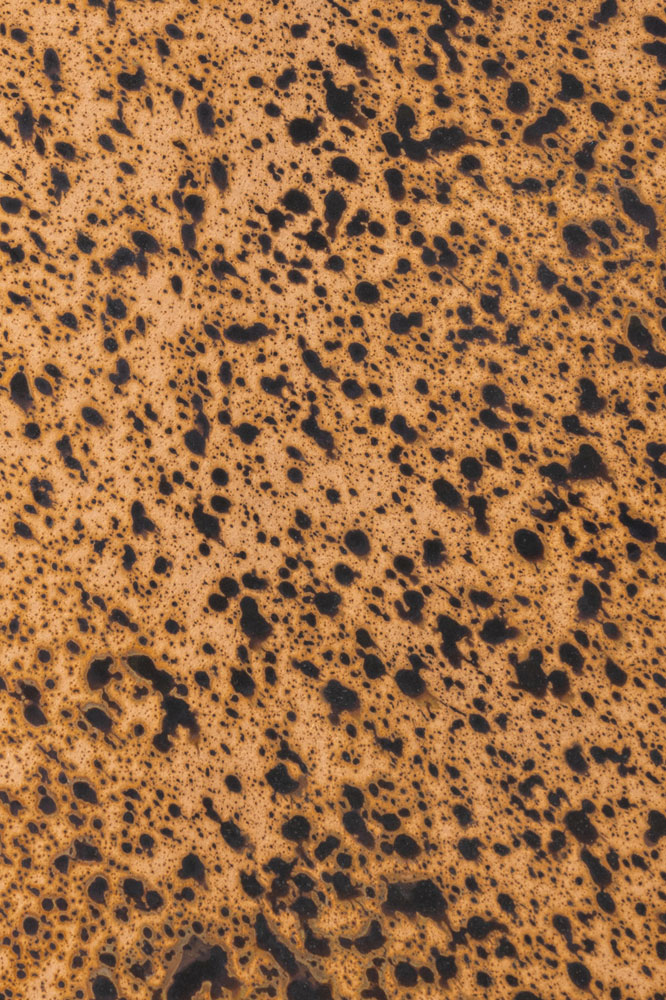
Light ochre brown with black speckles
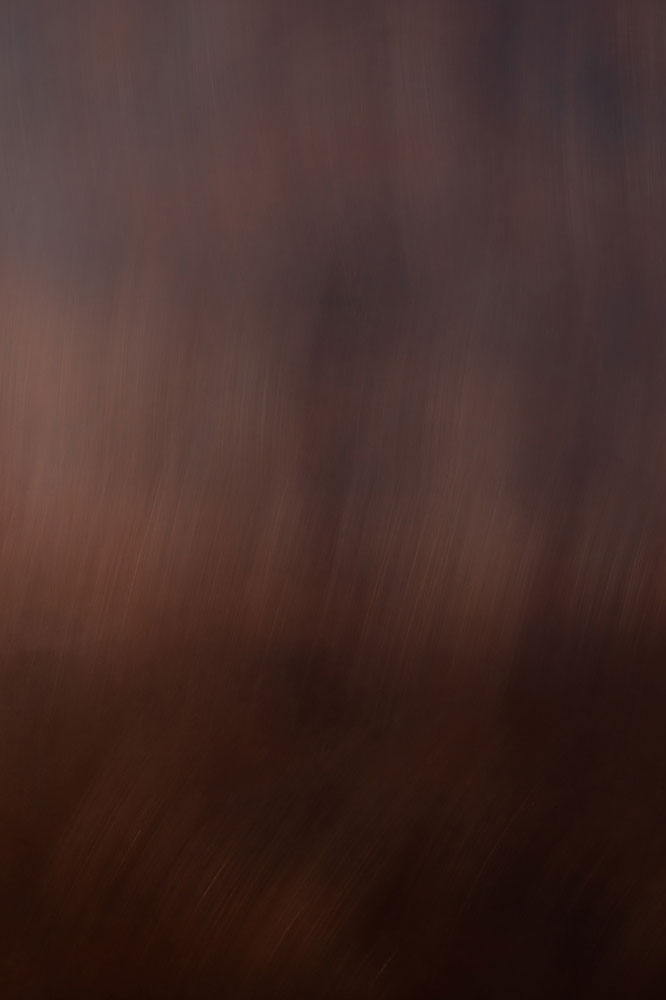
Dark red brown with violet streaks
What happens to a copper surface
Copper does not stay the way it is delivered. It runs through a series of states, and where it ends depends on how steep the surface is and how long rain stays on it.
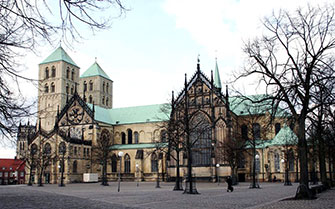
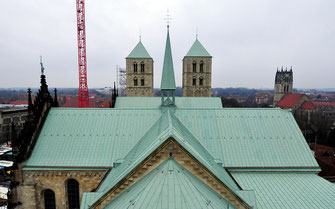
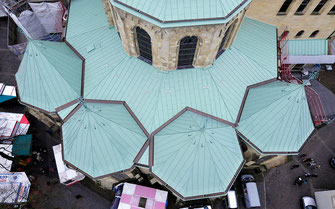
16,000 square metres at St Paulus Cathedral
The entire roof surface was patinated in the workshop before it went onto the building. An even copper patina that gives the cathedral from day one the appearance it would otherwise have waited decades for. At the Sinclair Tower in Vancouver the roof spires carry the same hand.
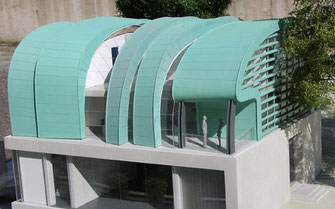
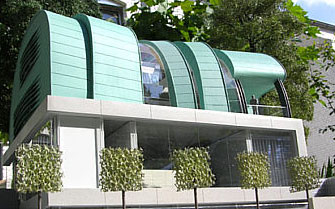
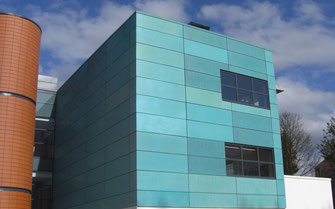
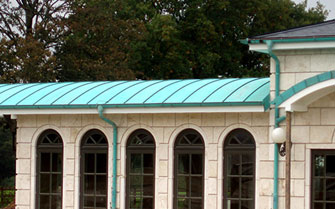
Patinated copper on the building
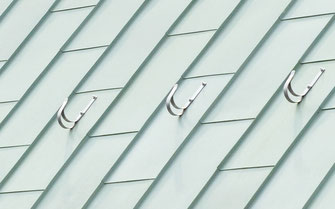
Photographs from completed projects, from the church roof to the curved dormer on a house.
Frequent questions
How does patina form on copper?
In dry air, bare copper forms an oxide film within hours that the eye cannot yet see. Under moisture, oxygen and airborne pollutants that layer keeps growing, the metal loses its shine and turns an even brown. Only over years do basic copper compounds develop from it, the green patina. Patination reproduces that process in the workshop, so the intended state is there from the start.
Why does a roof turn green while a façade does not?
Because precipitation stays on a pitched surface longer than on a vertical one. On external wall cladding the brown keeps deepening and usually stops at an anthracite brown, which is the final state there. On pitched roofs the layer develops further, up to the familiar patina green. Where pitched and vertical surfaces meet, a drip edge belongs in between.
How long does copper take to turn green by itself?
On flat surfaces heavily exposed to rain, the strong green appears after roughly eight to fifteen years, depending on rainfall and the composition of the water. On the way there the surface passes through every intermediate stage from red gold through brown to anthracite. Anyone who wants the final state from day one has the surface patinated in the workshop.
Can patination be accelerated on site?
We advise against it, and so does the German Copper Institute. Chemical colouring processes are intended for small objects indoors. Applied over large areas under site conditions the result is usually blotchy, and the layers created that way are generally not weather resistant: the natural process removes them again after a while. Copper sheets and strips patinated in the works, by contrast, come in consistent quality.
What is the difference between patina and verdigris?
Patina consists of basic copper compounds, mostly carbonates and sulphates, near the coast also chlorides. It forms through air, moisture and carbon dioxide, adheres firmly and is harmless. Verdigris is a mixture of basic copper acetates and forms through acetic acid. It attacks the copper and is toxic. On a building it practically never occurs. The two are constantly confused but are different substances.
Does the patina protect the copper?
Yes. The layer adheres firmly, is stable in itself and renews itself where it is damaged. It slows further attack by air and moisture and is the reason copper roofs last for centuries. Copper is also resistant to building materials such as gypsum, lime and cement, and is not endangered by condensation.
Does patina look the same everywhere?
No. Its composition depends on the air at the location, so it turns out differently from region to region. Near the coast a blue green tone often appears, in cities it stays dark brown for longer. The pitch and orientation of the surface play their part as well.
Can run-off water discolour the building parts below?
Yes. Rain running over an unsealed copper surface carries dissolved copper compounds with it. Where it meets pale materials such as natural stone, fair-faced concrete or render, greenish veils can form. Controlled water routing with drip edges and gutters avoids it.